Debt and IOU tracker app: Keep loans with friends and family clear.
Write down money you lend or borrow under each person's name. Kashaa keeps a running balance and every payment, so nobody has to rely on memory, and a loan never shows up as spending.
The problem
A loan is not an expense.
Log “lent ₱2,000 to Maria” as an expense and your spending is wrong. Leave it out and your balance is wrong.
Kashaa keeps loans on their own list, so both numbers stay right.
How it works
Every way money moves between you and someone else.
Each entry updates your account and that person's balance at the same time, so both stay right.
| Action | Meaning | Cash | Their balance |
|---|---|---|---|
| Lend | You lent them money | out | they owe you more |
| Collect | They paid you back | in | they owe you less |
| Borrow | They lent you money | in | you owe them more |
| Repay | You paid them back | out | you owe them less |
There's also Waive, for when you decide to let some or all of it go. The history stays.
Keeping it clear
Clear numbers make money easier to talk about.
Loans between friends and family go smoother when nobody has to remember the details. Each loan keeps its date and amount, plus every partial payment, so how much is left is never in question.
Kashaa never messages anyone. It's a record for you, nothing more.
The Debts tab
Everyone's balance in one list.
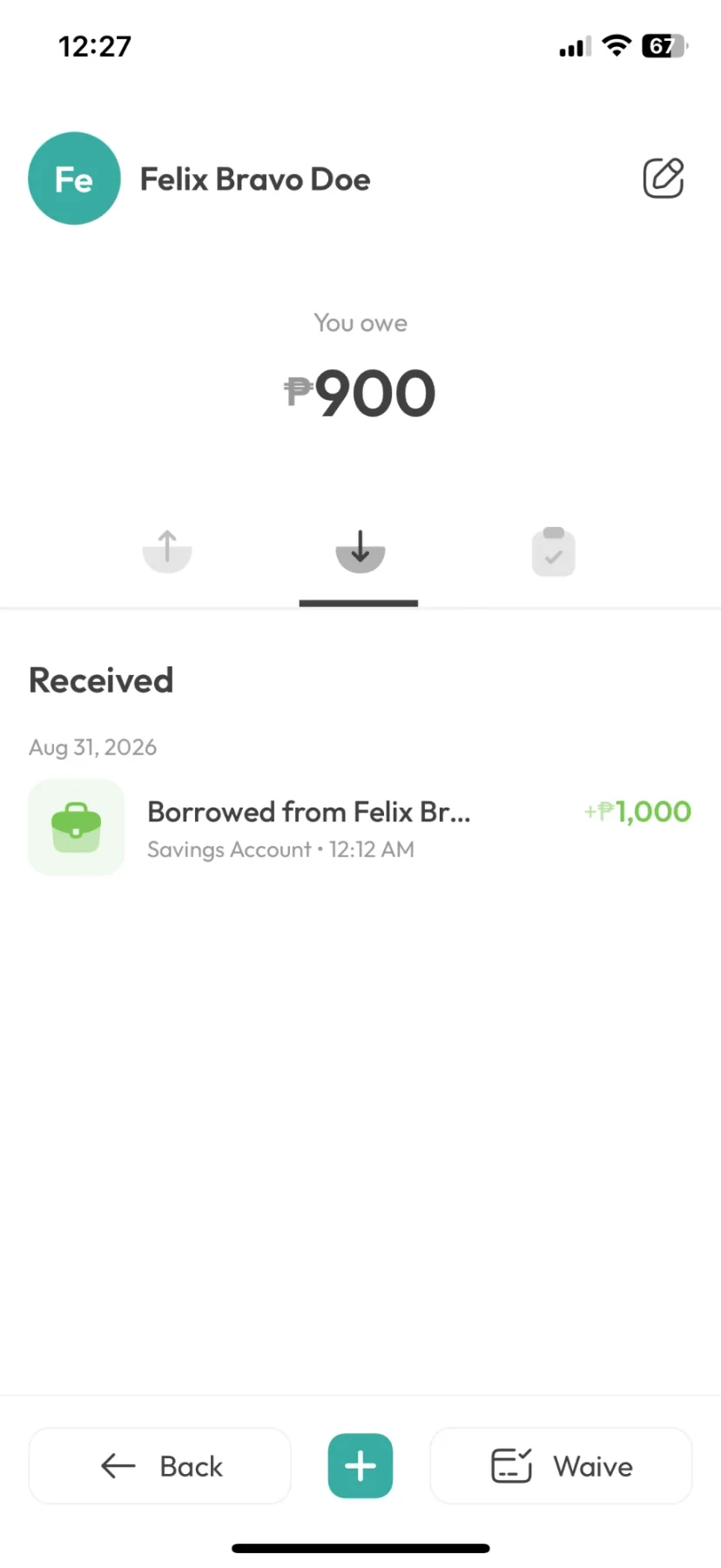
The Debts tab lists everyone you have an open balance with, largest at the top. Tap a name to see what's left and the full history behind it.
Sent
Loans you made and repayments you handed back.
Received
Their repayments and anything you borrowed.
Waived
Amounts you decided to let go, still in the history.
FAQ
Debt tracker: common questions
No. The money is still yours, it's just with someone else for now, and getting it back isn't income either. Kashaa keeps loans on a separate list so your spending totals stay accurate.
Use Waive. Their balance goes down by the amount you forgive, and the original loan stays in the history.
No. It never contacts anyone, and the other person doesn't need the app. It's your own record, with the date, the amount and every partial payment, so the numbers are clear whenever it comes up.
Only if you expect it back. Regular support is an expense, and Family & Kids has an Allowance subcategory for it. A loan to a sibling or a friend goes in Debts.
They come with you. Sign in on the new phone and every person, loan and payment syncs back.
Yes, for up to 5 people, with as many loans and payments as you like. Pro raises the limit to 10,000 people. Like the rest of Kashaa, it works offline.
Related features
Fast entry
Opens straight to a number pad, so an expense takes about ten seconds to log.
Voice entryPro
Say what you spent in one sentence, then check the entries before they save. The recording stays on your phone.
Multiple accounts
GCash, Maya, bank and cash in one balance.
Works offline
Everything saves on your phone first. The whole app works without signal, except voice entry.
Spending heatmap
A calendar where each day is shaded by how much you spent.
Budgets
Weekly or monthly limits on the spending you want to watch.
No more guessing how much is left.
Debt tracking is included in the free version.